Spider Season Is on Its Way Again. Here Is How to Actually Keep Them Out This Year.
It happens every year. You are settling in for the evening, the telly is on, and something the size of a small crab careers across the carpet and ruins everything. Spider season is coming, and it is worth getting sorted before it does.
Late August to October is when things get lively in UK homes. That is when male house spiders come out of their hiding spots looking for a mate, and because they have spent months sitting quietly in a corner of your garage or under the garden shed, they tend to make quite an impression when they finally appear. They are also, to be fair to them, completely harmless. But that rarely helps much at 11pm when one appears from under the sofa.
The thing is, most people wait until they have already found three in a week before they do anything about it. Getting ahead of spider season now, while it is still warm and dry, is a much better approach. It does not take a lot of effort, but the timing matters.
Understand Why They Are Coming In
Spiders do not come indoors because it is getting cold outside. That is one of those myths that refuses to die. Male spiders are driven purely by the need to find a female, and your home happens to offer exactly what they are looking for: warmth, dark corners, and not much disturbance. Once a spider finds a spot it likes, it will stay there indefinitely if left to its own devices.
What also draws them in is food. A house with a lot of flies, moths or midges is essentially a well-stocked larder for any passing spider. If you are dealing with spiders every year without fail, it is worth thinking about what else might be attracting insects in the first place, because the spiders will follow.
Go Around the Outside of Your Home and Actually Look
This one gets skipped because it feels like a lot of effort, but it takes about twenty minutes and it genuinely makes a difference. Walk around your home at ground level and look for gaps around pipes, cables and air bricks. Check where window frames meet the wall. Look at the gap under your back door. Any of these is a perfectly usable entrance for a spider.
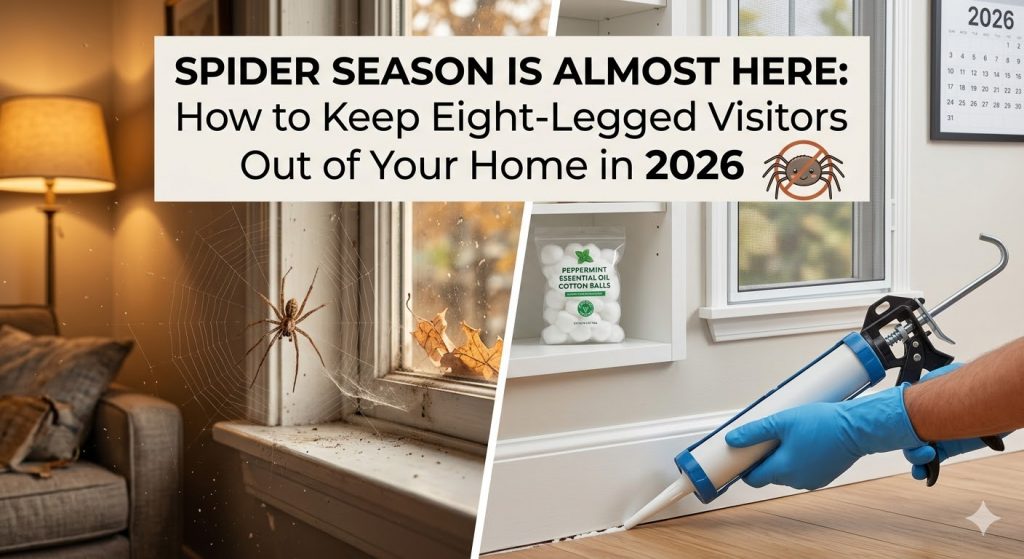
Expanding foam filler from any DIY shop deals with larger gaps quickly. A tube of silicone sealant handles the thinner ones around window frames and skirting boards where they have pulled slightly away from the wall. Neither costs much and both last for years.
WORTH DOING RIGHT NOW
Check the seal around your loft hatch. Loft spaces are absolutely full of spiders, and a loose-fitting hatch is basically a direct route from up there into your bedroom ceiling. A few minutes with a draught excluder strip will fix it.
Sort Out Your Clutter
Spiders love mess. Not in a judgmental way, but practically speaking, a pile of cardboard boxes in the corner of a room, a stack of old magazines, firewood leaning against the back of the house, stuff pushed under the bed and forgotten about — all of that is ideal spider habitat. Dark, undisturbed, rarely touched. Brilliant if you are a spider, less so if you are the one who has to live there.
A tidy-up before the season starts removes a surprising amount of the appeal. Move firewood away from the house entirely if you can. Hoover under furniture properly rather than just around it. Run the vacuum nozzle along skirting boards and into the corners of ceilings. If a spider builds a web somewhere and it keeps getting removed, it will look for somewhere more peaceful. That somewhere does not have to be your home.
Peppermint Oil Does Actually Seem to Help
There is no magic spray that will keep every spider out, but peppermint oil genuinely has a decent reputation and plenty of people use it every year with good results. Fill a small spray bottle with water, add about 20 drops of peppermint essential oil and a small squeeze of washing-up liquid to help it mix, then spray around windowsills, door frames and anywhere else you tend to find them. It needs reapplying every few days as the scent fades, but it is cheap and it smells nice, which is more than can be said for most pest deterrents.
Cedarwood, lavender and eucalyptus are all worth trying too. A few drops on cotton wool balls tucked along skirting boards or inside wardrobes is an easy option if you do not want to be spraying things all over the walls.
WHAT ABOUT CONKERS?
The evidence is pretty thin, honestly. But people have been putting horse chestnuts on windowsills every autumn for generations and it costs absolutely nothing to try. If nothing else, they look seasonal.
Think About Your Outdoor Lights
This is the one that most people have never considered. Bright white lights near doors and windows pull in moths, flies and all sorts of other insects overnight, and spiders know this just as well as we do. A bright porch light is essentially a free dinner invitation.
Switching to warm amber LED bulbs for any external lights makes a noticeable difference to how many insects gather around your doors at night. Motion sensor lights are even better because they are only on for a few seconds at a time rather than all evening. It is a small change, but it addresses the root cause rather than just the symptom.
When One Gets In Anyway
They will. A glass and a piece of card is still the best method, and if you slide the card under slowly you can usually manage it without losing your nerve halfway through. Put it in the garden rather than right outside the door, or it will come straight back in.
If you have a real phobia, there are long-handled spider catchers available for a few pounds that let you pick them up from a distance. They work well and they mean you do not have to get anywhere near the thing, which for some people makes the whole experience significantly more manageable.
One Last Thing
For all the fuss they cause, house spiders are actually earning their keep. They eat flies, moths, mosquitoes and anything else small enough to wander into their web. They are not dangerous, they do not cause any damage, and most of the time they are sitting quietly somewhere you will never even see them. A few sensible steps now will mean far fewer of them making dramatic appearances across your floor come September, which is probably the best outcome for everyone, spiders included.